
If you have ever asked yourself "why does my hip hurt?" without being able to point to a fall, a twist or a long run, you are not alone. Most hip pain causes are common and manageable, like arthritis, bursitis or a strained muscle. But a deep, severe pain in the hip or groin that seems to come out of nowhere can sometimes point to something less familiar: avascular necrosis of the hip.
At San Antonio Orthopaedic Specialists, we would rather you ask the question early than wait it out. Here is what avascular necrosis is, the symptoms worth watching for, and how treatment options change depending on when it is found.
Why Does My Hip Hurt With No Injury?
When people ask what causes hip pain without an injury, the answer usually comes from one of a few places:
Arthritis, the gradual wear of the cartilage that cushions the joint
Bursitis or tendon irritation on the outside of the hip
A labral tear, often felt as catching or clicking in the front of the hip
Avascular necrosis (AVN), when the bone itself starts to lose its blood supply
The first three are far more common. AVN is less common, but it matters because it tends to progress. The earlier it is caught, the more ways there may be to protect the joint.
What Is Avascular Necrosis of the Hip?
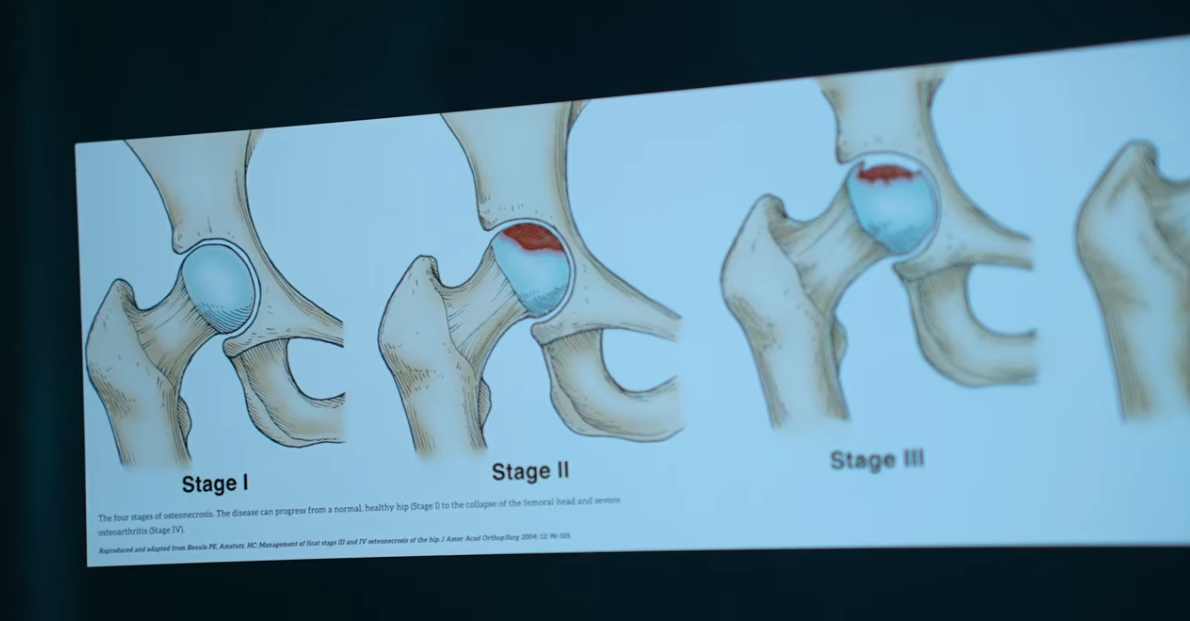
Avascular necrosis, also called osteonecrosis of the hip or AVN hip, happens when blood flow to the ball of the hip joint (the femoral head) is reduced or cut off. Without a steady blood supply, the bone can weaken and eventually collapse, damaging the joint and leading to arthritis.
AVN most often affects adults in their 30s to 50s. Common risk factors include long-term steroid use, heavy alcohol use, and a past hip fracture or dislocation. Conditions like sickle cell disease or lupus may also play a role, though in some patients no clear cause is found.
Avascular Necrosis Symptoms to Watch For
One of the most telling signs is how the pain starts. Instead of building slowly after an injury, AVN pain often shows up suddenly, with no fall or strain to explain it. As Dr. Broome of San Antonio Orthopaedic Specialists explains:
"What we see more frequently is someone doesn't really have an injury, they just have an abrupt onset of severe pain."
Common avascular necrosis symptoms include:
Deep hip pain that feels like it is inside the joint
Groin and hip pain, often the first place it is noticed
Pain with standing or walking that eases with rest, at first
Pain that later lingers even at rest or at night
Stiffness, like trouble putting on shoes or socks
A limp that develops over weeks or months
If any of these sound familiar, especially with one of the risk factors above, it is worth having your hip looked at by an orthopaedic specialist.
How Avascular Necrosis Is Diagnosed
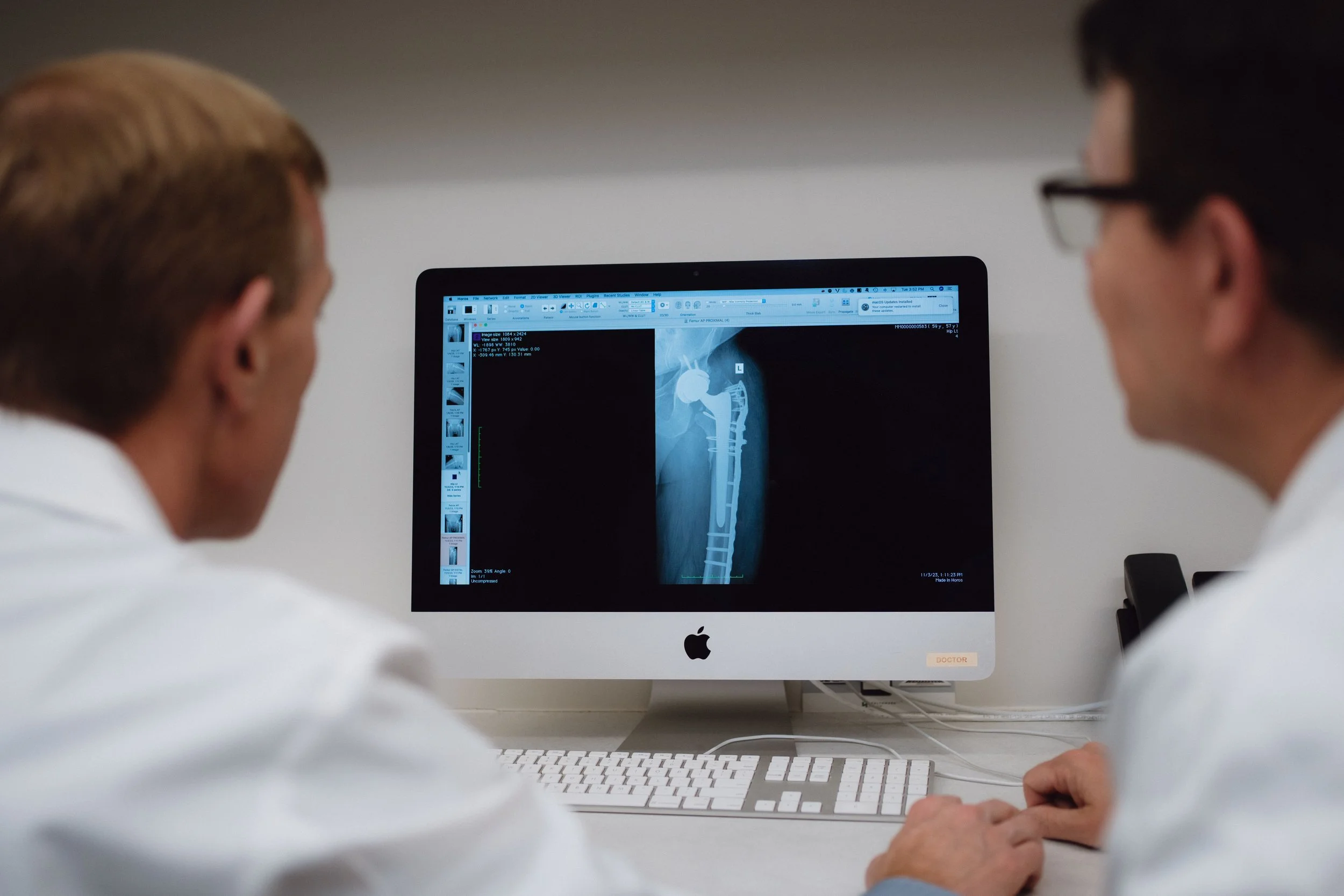
Early AVN often does not show up on a standard X-ray, which is one reason it can be missed. Dr. Broome explains that many patients come to SAOS simply because they have unexplained hip pain.
An X-ray may show changes in some cases, but other imaging, like an MRI, is often what reveals avascular necrosis in its early stages. Your specialist will also look at your history, your risk factors and how your hip moves during an exam.
How Quickly Does AVN Progress?
For most patients, AVN is a gradual process that unfolds over months to years. Pain may come and go at first, then slowly become more constant as the bone weakens. In rarer cases, Dr. Broome notes, it can move much faster, progressing to end-stage arthritis within a few weeks or months.
Because there is no way to know ahead of time which path the condition will take, getting an answer sooner gives you and your surgeon more room to plan. Follow-up imaging can show whether the bone is holding steady or changing, so your treatment plan can adjust as needed.
Avascular Necrosis Treatment Options
The right avascular necrosis treatment depends largely on one question: Has the ball of the hip started to collapse?
When AVN is caught early
Before the bone has collapsed, the goal is to slow the condition down and protect the natural joint. Options may include limiting weight on the hip, medications to help manage pain, and in some cases a procedure called core decompression. Core decompression of the hip removes a small core of bone from the affected area, which may relieve pressure and encourage new blood flow.
When AVN has progressed
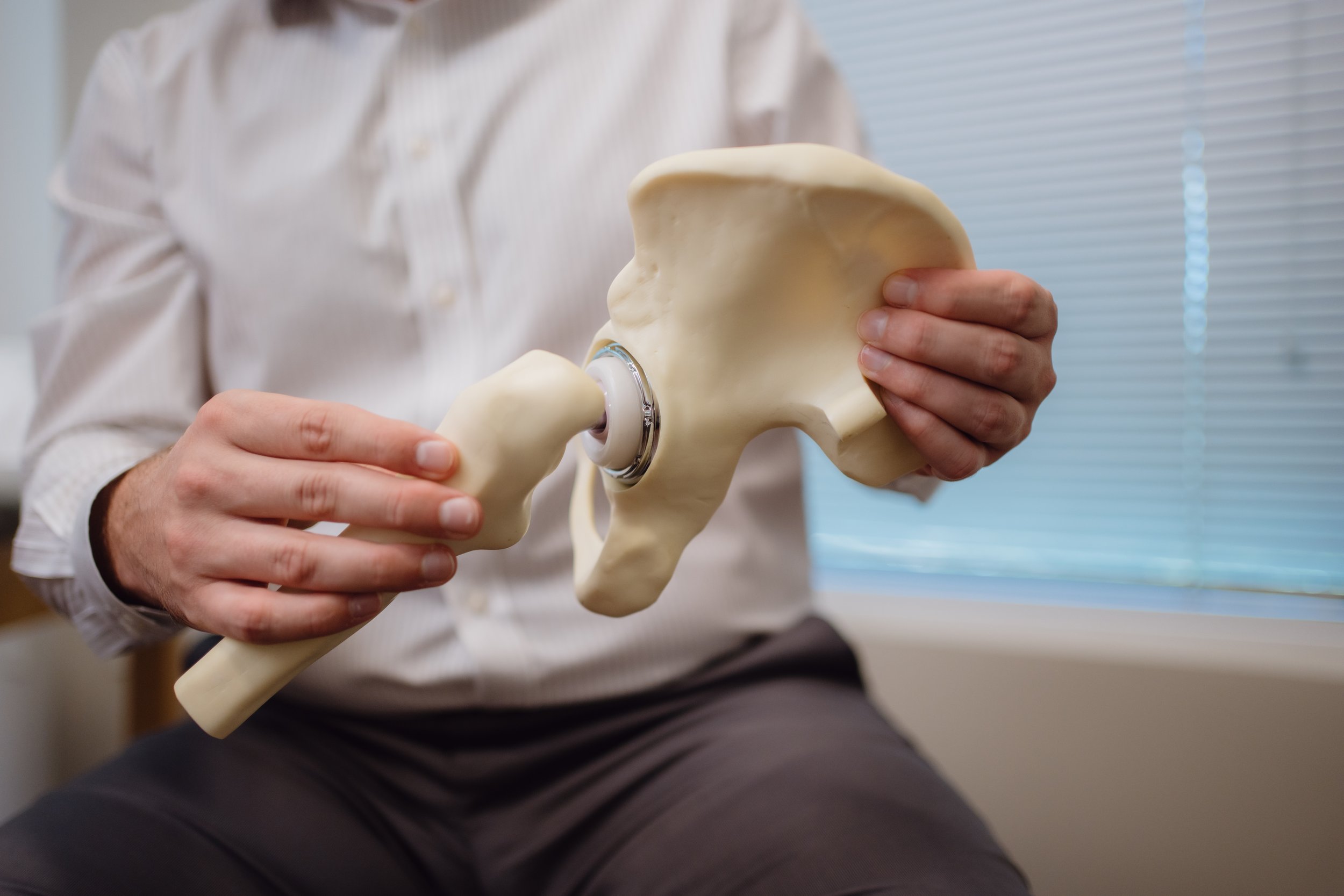
Once the joint surface has collapsed, hip replacement is often the most reliable way to relieve pain and restore movement. At this stage, the damaged bone cannot heal on its own, and conservative care alone often stops giving lasting relief. A hip replacement removes the collapsed ball and worn socket and replaces them with smooth new joint surfaces. Because AVN often affects younger, active adults, our surgeons focus on tissue-sparing techniques designed to support a quicker recovery and a return to the activities you enjoy.
Does Hip Replacement Cure Avascular Necrosis?
Hip replacement does not reverse AVN in the bone, but it removes the damaged ball and socket and replaces them with new joint surfaces. For many patients with advanced avascular necrosis, that may relieve the pain and stiffness caused by the condition and help them get back to daily life. Because AVN often affects younger, active adults, your surgeon will talk through timing, implant choices and recovery with you in detail.
Why Early Answers Matter
AVN is one of the hip conditions where timing really matters. Waiting until pain is constant can mean fewer choices. Getting an answer while the bone is still intact may give you more ways to protect your natural hip for as long as possible.
That is also why we take a concierge approach. You get time with your surgeon, direct communication, and a plan that fits your life, whether that means watching carefully, starting conservative care, or planning for surgery when the timing is right.
Talk With a Hip Specialist in San Antonio
Not every practice takes the time to look past "it is probably arthritis" when hip pain does not add up. At San Antonio Orthopaedic Specialists, our hip specialists combine a careful exam, advanced imaging, and a concierge approach to find the real cause of your pain. Whether that means protecting your natural hip with early treatment or planning a tissue-sparing hip replacement, you will have a clear plan and a team that walks with you every step of the way.
If deep hip or groin pain is limiting your everyday activities, our orthopaedic surgeons in San Antonio are here to answer your questions, explain what to expect, and help you choose the best approach for your needs. The sooner you have answers, the more options you may have. Take the first step toward lasting hip pain relief and getting back to the life you love.