
Lipogems vs. Traditional Joint Injections: What's the Difference?
When joint pain starts interfering with walking, exercise, work, or everyday activities, surgery is not always the first or only option. Joint injections can be used to help manage pain and improve function, but not every injection works the same way.
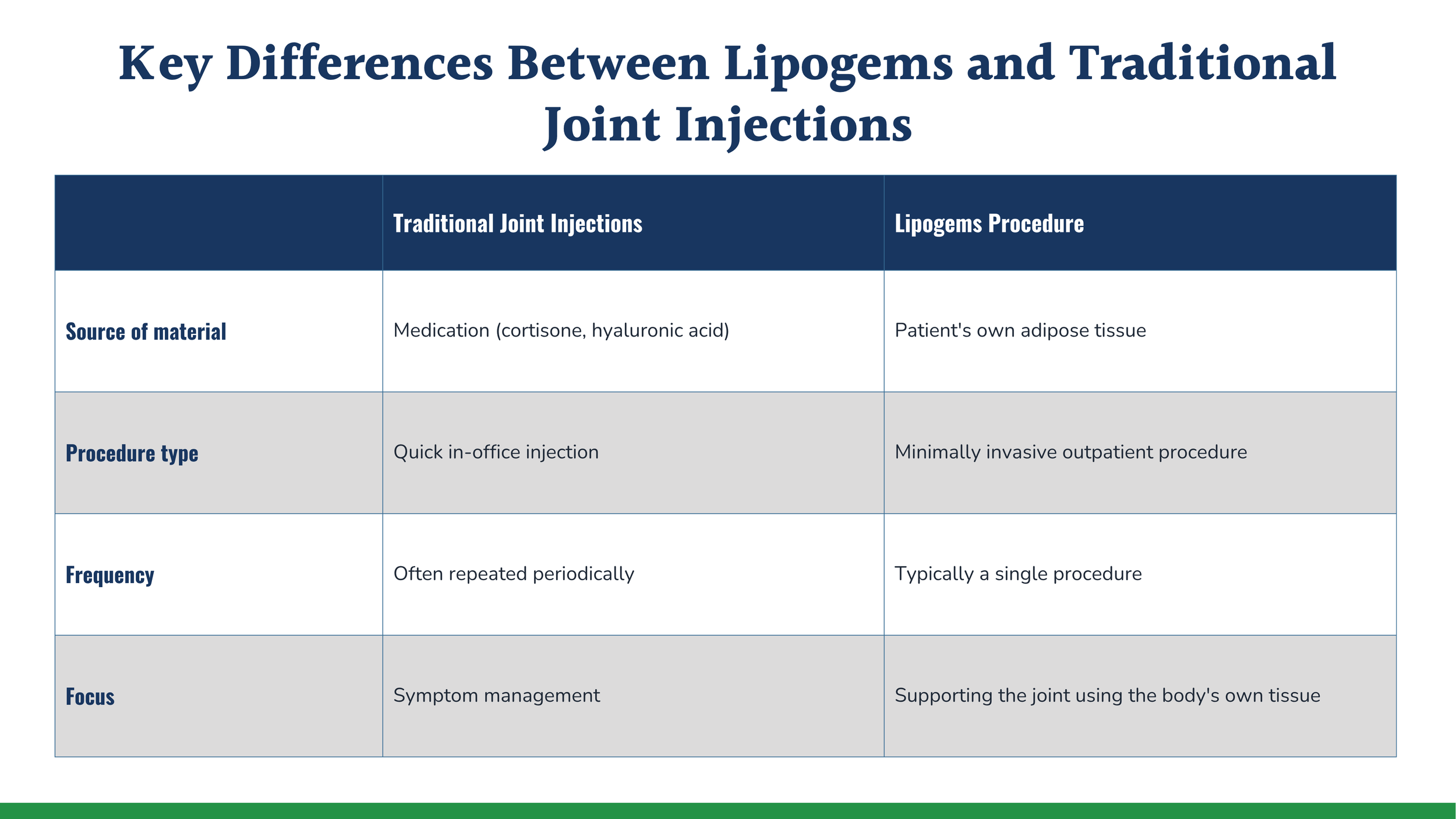
Traditional options such as corticosteroid and hyaluronic acid injections are commonly used to address joint pain and arthritis symptoms. Lipogems takes a different approach by using a patient’s own fat tissue to provide cushioning and structural support within an injured or arthritic joint.
So, how does Lipogems compare to traditional joint injections, and which option may be appropriate for you?
What Are Traditional Joint Injections?
Joint injections are nonsurgical treatments delivered directly into or around a painful joint. Depending on the type of injection, treatment may be intended to reduce inflammation, improve lubrication, or provide temporary pain relief.
Common joint injections include:
Corticosteroid Injections: Used to reduce inflammation and provide temporary relief from joint pain.
Hyaluronic Acid Injections: Often used for knee osteoarthritis to supplement the joint's natural lubricating fluid.
PRP Injections: Use concentrated platelets from the patient's own blood to support the body's natural healing response.
The appropriate injection depends on the joint being treated, the cause and severity of the symptoms, and the patient's overall treatment goals.
What Is Lipogems?
Lipogems is a minimally invasive treatment that uses micro-fragmented adipose tissue, or fat tissue, collected from the patient's own body.
A small amount of fat is typically collected from the abdomen or another suitable area. The tissue is then processed using the Lipogems system and injected into the area being treated.
Unlike a corticosteroid or hyaluronic acid injection, Lipogems uses the patient's own tissue. The processed tissue retains components that may help provide structural support and create an environment that supports the body's natural repair processes.
How Does the Lipogems Procedure Work?
The Lipogems procedure typically happens in a few stages, all in a single outpatient visit:
A small amount of adipose tissue is collected from an area with excess fat, usually the abdomen or thigh, using a minimally invasive technique.
That tissue is processed using the Lipogems system, which cleans and refines it without exposing it to harsh chemicals or lengthy lab processing.
The processed tissue is then reintroduced directly at the site of joint pain or injury.
Because the tissue comes from the patient's own body and the entire process happens in one visit, there's no separate lab processing period or multi-step timeline to plan around. Most patients are able to return home the same day.
How Do You Know Which Option Is Right for You?
The right approach depends on your specific condition, how far your joint pain has progressed, and what you've already tried. Patients who've had success with cortisone or hyaluronic acid injections may continue with that approach, while patients looking for a different option, particularly those who haven't found lasting relief from injections alone, may want to discuss whether Lipogems is appropriate for their situation.
This isn't a decision to make from a blog post alone. An in-person evaluation is the only way to know which approach, or which combination of approaches, actually fits your joint, your activity level, and your goals.
What Does Recovery Look Like for Each Option?
Recovery timelines differ between the two approaches, and that's often a real factor in the decision.
With traditional joint injections, most patients can resume normal activity almost immediately, sometimes the same day, with only minor soreness at the injection site. Because the effects are often temporary, patients may need to plan for repeat visits down the line as symptoms return.
With the Lipogems procedure, recovery involves two sites: the area where tissue was collected and the joint where it was reintroduced. Most patients experience mild soreness in both areas for a few days, with a gradual return to normal activity over the following one to two weeks. Because it's typically a single procedure, there's less need to plan around repeat visits, though individual healing timelines vary.
Your provider can walk you through a more specific recovery timeline based on your health, your activity level, and which joint is involved.
Who Might Not Be an Ideal Candidate for Lipogems?
Just as importantly as knowing who Lipogems can help, it's worth understanding who it typically isn't recommended for. Patients with very advanced joint damage or bone-on-bone arthritis often won't see meaningful benefit from Lipogems alone, since the procedure is designed to support joint tissue rather than replace a joint that's already severely deteriorated. In those cases, other options, including traditional injections in the short term or a conversation about surgical approaches, may be more appropriate.
Certain health factors, like active infections, some autoimmune conditions, or blood-clotting disorders, can also affect candidacy and are evaluated on a case-by-case basis. This is exactly why an in-person evaluation matters so much: it's the only way to know whether Lipogems, traditional injections, or another approach entirely is the right starting point for your specific joint and health history.
Ready to Discuss Your Joint Injection Options?
Not every practice offers both traditional joint injections and Lipogems, and not every provider has the experience to help you weigh the two honestly. At San Antonio Orthopaedic Specialists, our team takes the time to walk you through both options and what each one actually involves, so you can make an informed decision about your care.
If joint pain has you weighing your options, the first step is a conversation with our team about what approach makes sense for you.